



The expedition on R/V Akademik Koptug from July 20 to August 2, 2025
From July 20 to August 2, 2025, the complex expedition within the State Assignment of LIN SB RAS “Study of the role of atmospheric precipitation on aquatic and terrestrial ecosystems of the Lake Baikal basin, identification of sources of atmospheric pollution” (0279-2021-0014) (led by Khodzher T.V.) and RSF grant No. 19-77-20058-P was carried out on R/V Akademik Koptug.
The expedition aims to carry out ongoing observations of the physical parameters and chemical composition of aerosols, gas impurities, and meteorological conditions in the atmosphere above the water area of Lake Baikal. This will be achieved using the equipment from LIN SB RAS, the Institute of Physical Material Science SB RAS, and the instrument base of CUC “Atmosfera” of Institute of Atmospheric Optics SB RAS. Additionally, the expedition will evaluate the impact of anthropogenic sources in the Baikal region, as well as natural hazards such as forest fires and emissions from ships, on air pollution over the lake during the summer.
As a result of the expeditionary work, a dataset has been expanded regarding the characteristics, content, and spatiotemporal variability of minor gas impurities (ozone, carbon dioxide, nitrogen dioxide, sulfur dioxide), gaseous elementary mercury, and the numerical and mass concentration of solid particles, as well as inorganic and organic compounds in atmospheric aerosol. An assessment was conducted on the impact of meteorological and synoptic conditions on their variability in the atmosphere over the waters of Lake Baikal in areas with varying anthropogenic load. The peak concentrations of nitrogen and sulfur oxides in the surface layer of Lake Baikal's atmosphere were observed at the river's source, reaching up to 15 μg/m3 and 16 μg/m3, respectively. In contrast to previous expeditionary ship measurements, weather and synoptic conditions enabled to distinguish the formation of the structure of gas fields in the mountain basin of Lake Baikal in the background. Cyclones occurring over the region led to the purification of the atmosphere due to constant precipitation and fitful wind, therefore, during the expedition of 2025 in the water area of the lake, the influence of smoke plumes from forest fires was significantly weaker compared to previous years of measurements in the water area of the lake. On average, the concentrations of sulfur and nitrogen oxides in the surface layer of the atmosphere of the northern and middle basins of Lake Baikal varied from 1 μg/m3 to 2 μg/m3. Spatiotemporal variability of aerosol impurities of various size fractions (РМ1, РМ2,5, РМ10). was studied. The average content of РМ10 particles in the surface layer of the lake atmosphere was 5.1 μg/m3, РМ2,5 = 2,7 μg/m3, РМ1 = 1,6 μg/m3. . In general, aerosol concentrations obtained during the 2025 expedition were commensurate with the results of changes in 2022-2024.
During the expedition, lidar studies of the features of the vertical structure of aerosol fields in the conditions of the mountain basin of Lake Baikal and the identification of the conditions for their formation were continued. As an example of the obtained data, the figure shows a fragment of the window of the lidar data visualization program with the image of the lower part of the troposphere observed on July 21, 2025. This observation episode is noteworthy because during the measurement period, aerosol traces of a smoke plume originating from fires in the Goloustnoye area were detected within the atmospheric boundary layer (ABL). The optical density of this plume is relatively low. However, it is distinctly evident in relation to the depolarization of backscattered laser radiation, which qualitatively differs from the water aerosol generated from the surface of Baikal. It can be seen that it stretches from coast to coast for ~ 60 km, gradually descending from a ~ of 1000 m to the surface of the water. This plume was also observed in a longitudinal section along the eastern shore from Boyarsk village to Babushkin town. It can be inferred that this plume spreads in a fan-like manner from the fire source over the waters of Baikal, with a gradual and prolonged transfer and deposition onto the surface.
During the expedition, 30 samples of atmospheric aerosol were taken for chemical analyzes in the laboratory of hydrochemistry and atmospheric chemistry of LIN SB RAS.
The expedition route passed along the entire perimeter of Lake Baikal with stops in the area of large local sources of atmospheric pollution on the lake coast, estuarine sections of large tributaries, bays.
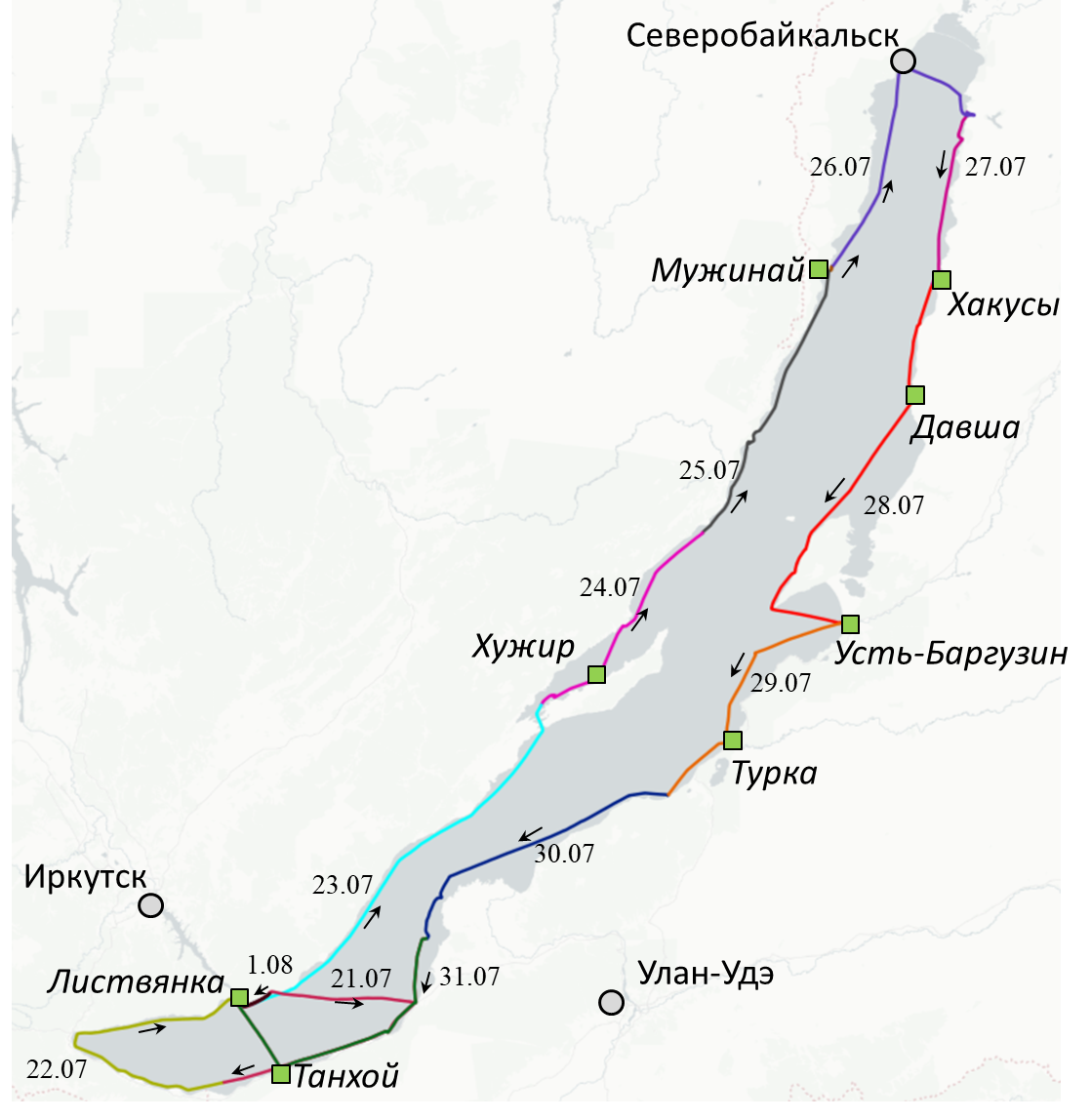

- Маршрут экспедиция проходил по всему периметру озера Байкал с остановками в районе крупных локальных источников загрязнения атмосферы на побережье озера, устьевых участках крупных притоков, заливах.
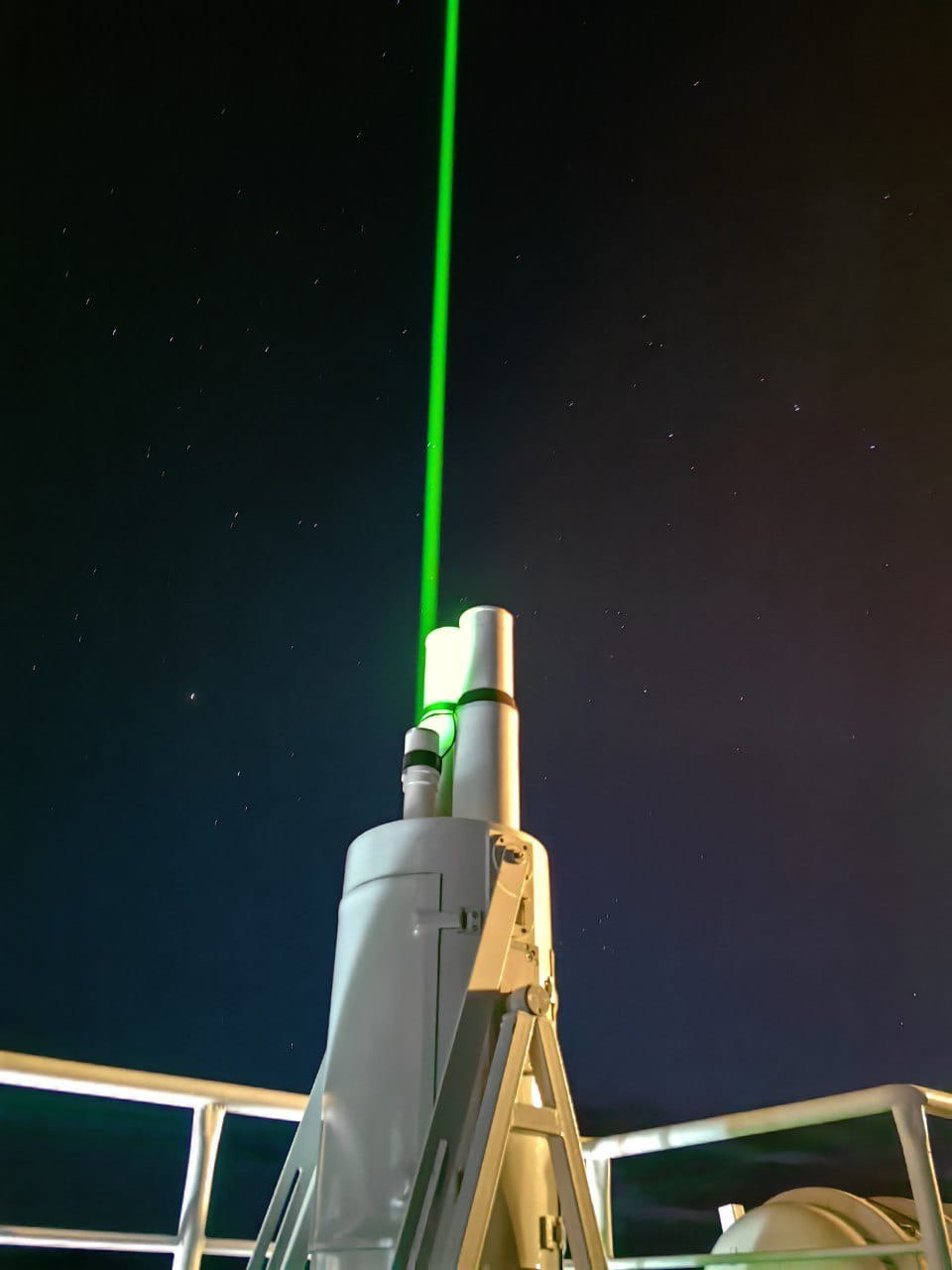
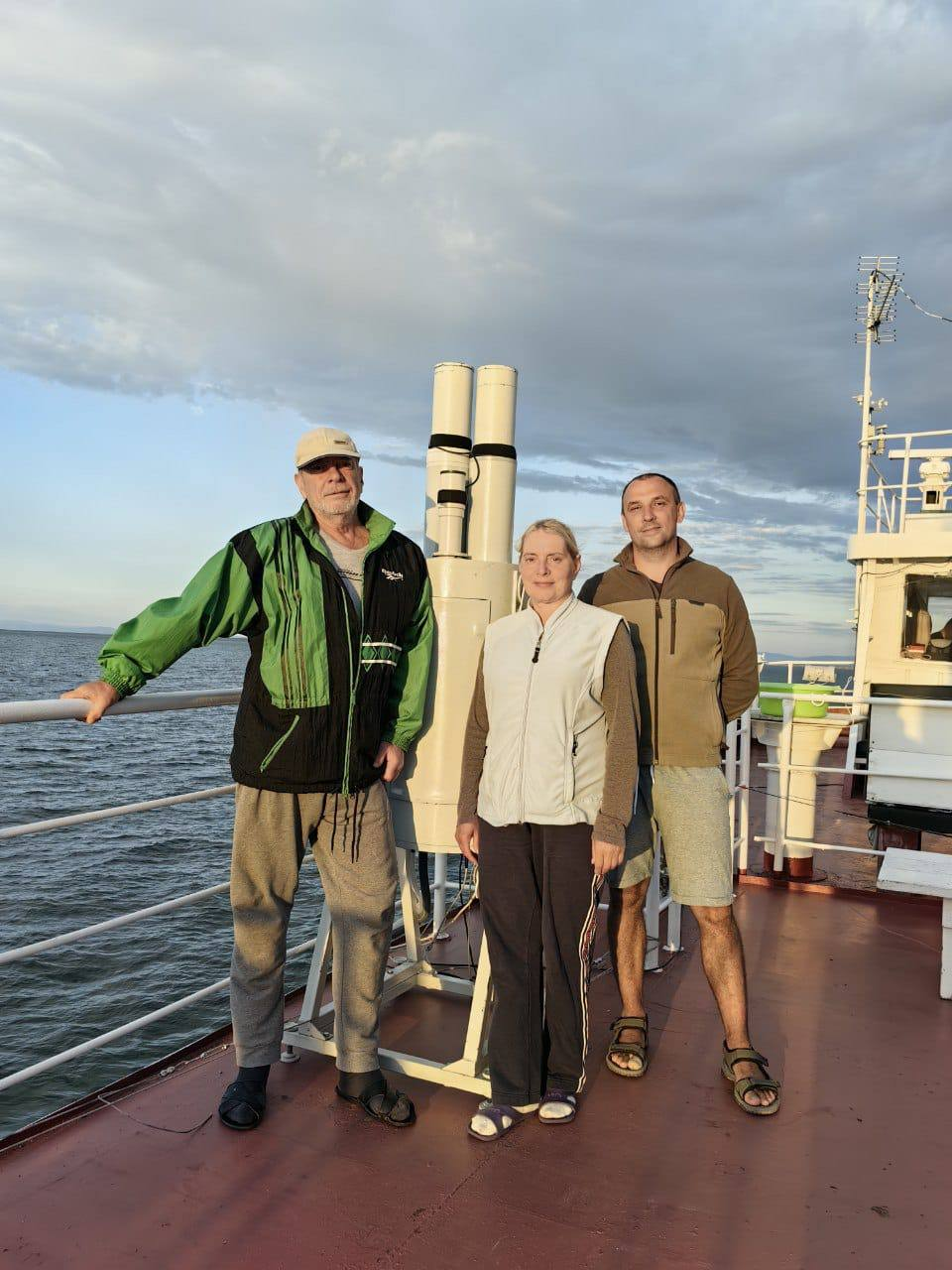
- Зондирование атмосферы над Байкалом аэрозольно-рамановским лидаром «ЛОЗА-А2»
- Пространственно-временная структура аэрозольного поля тропосферы (λ=532 нм), полученная лидаром «ЛОЗА-А2» с 10 до 14 часов м.в. 21 июля 2025 г. на поперечном разрезе Байкала от Голоустного до Боярска